Madeleine I. G. Daepp, Microsoft Research Scott Counts, Microsoft Research
Source
via arXiv
DOI: 10.48550/arXiv.2404.11988
Abstract
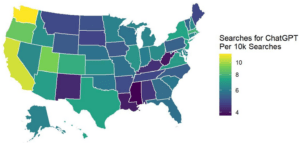
The digital divide describes disparities in access to and usage of digital tooling between social and economic groups. Emerging generative artificial intelligence tools, which strongly affect productivity, could magnify the impact of these divides. However, the affordability, multi-modality, and multilingual capabilities of these tools could also make them more accessible to diverse users in comparison with previous forms of digital tooling. In this study, we characterize spatial differences in U.S. residents’ knowledge of a new generative AI tool, ChatGPT, through an analysis of state- and county-level search query data. In the first six months after the tool’s release, we observe the highest rates of users searching for ChatGPT in West Coast states and persistently low rates of search in Appalachian and Gulf states. Counties with the highest rates of search are relatively more urbanized and have proportionally more educated, more economically advantaged, and more Asian residents in comparison with other counties or with the U.S. average. In multilevel models adjusting for socioeconomic and demographic factors as well as industry makeup, education is the strongest positive predictor of rates of search for generative AI tooling. Although generative AI technologies may be novel, early differences in uptake appear to be following familiar paths of digital marginalization.
Fig. 1 Rates of Search for ChatGPT by State. Colors indicate the fraction of all searches that included reference to ChatGPT in each state-period observation across the first six months since the initial public release of the generative artificial intelligence tool. Source: DOI: 10.48550/arXiv.2404.11988
Direct to Full Text
April 18, 2024 21 pages; PDF.”
Pro plugin deactivated or invalid
Posted on: May 11, 2024, 6:31 amCategory: Uncategorized
Stephen Abram is a librarian and principal with Lighthouse Consulting Inc., and executive director of the Federation of Ontario Public Libraries. He blogs on library strategies for direction, marketing, technology and user alignment.

0 Responses
Stay in touch with the conversation, subscribe to the RSS feed for comments on this post.