The Problem With AI Detection in Schools
What the research says and why it means a policy shift is overdue
https://aischoollibrarian.substack.com/p/ai-detectors-are-failing-our-students
“A recent study, AI Writing Detectors Are Ineffective, Unreliable, and Harmful by Louie Giray, brings together a growing body of evidence and makes a clear argument:
AI writing detectors are not reliable enough to be used in educational decision-making, and using them that way risks real harm to students.
This is not theoretical.
One widely cited study found that AI detectors falsely identified a majority of essays written by non-native English speakers as AI-generated. That is not a margin of error. That is a systemic failure.”
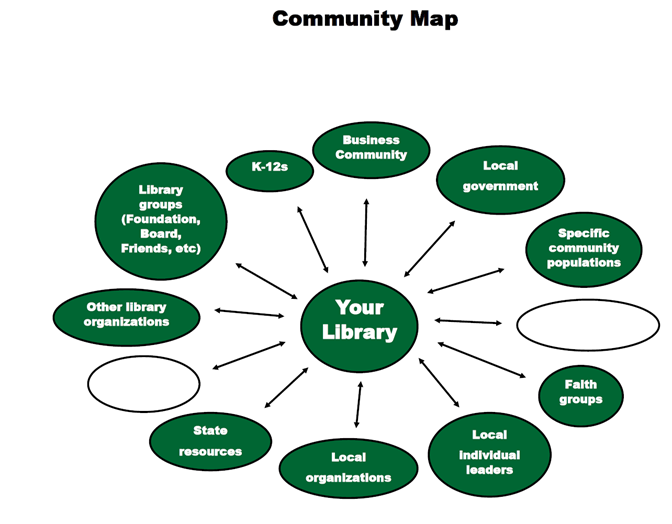
Engagement and Advocacy Start with Community Mapping
NEWS: The Library of Congress will make a trailblazing contribution to the America250 Time Capsule in Philadelphia in July: a tiny metal vial holding synthetic DNA encoded with digital copies from the Library’s collections.
The Library initiated a molecular data storage feasibility study in response to a request from Congress in 2024. As a result, the Library has been examining the storage capabilities of a new medium, synthetic DNA. An entirely manufactured molecule, synthetic DNA is designed to replicate the exceptional information density of nature’s best storage medium: DNA itself.
Working with the University of Washington’s Molecular Information Systems Lab, the Library has converted selected digital data into synthesized DNA strands encased in a metal vial about the length of a pencil eraser.
Images: A one gigabyte synthetic DNA storage pellet encoded with digital copies of Library collection items is displayed alongside Thomas Jefferson’s handwritten draft of the Declaration of Independence, one of the many items molecularly stored, May 14, 2026. The DNA pellet will be buried in a time capsule in Philadelphia to mark America’s 250th birthday, and is set to be reopened in 2276. Photo by Shawn Miller/Library of Congress.
A one gigabyte synthetic DNA storage capsule containing digitized versions of Library of Congress collections treasures (next to a U.S. quarter for scale), is prepared to be included in a time capsule for America’s 250th anniversary this summer.
Photo by Shawn Miller/Library of Congress.
LPC releases report on current state of staffing in library publishing
Via IFLA & Ann Okerson
“The Library Publishing Coalition is pleased to announce the release of the report, Powered by People: Staffing and Capacity in Library Publishing Programs and to invite the community to a webinar on June 2nd where we will share highlights and answer questions.
About the report: In summer 2025, LPC’s Staffing Survey Task Force released a survey of library publishing programs to develop a deeper understanding of how and by whom library publishing programs are staffed. The report we are releasing today outlines results and discusses key takeaways, including:
-
Good practices and pain points
-
Alignment between output expectations and institutional support of publishing programs
-
Intentionality of staffing changes and subsequent outcomes
-
Future needs and workload changes shaped by new technologies and requirements
Powered by People: Staffing and Capacity in Library Publishing Programs serves as an avenue for learning about and reflecting on labor-related decisions and changes happening within the library publishing community.
Webinar info: The LPC Staffing Survey Task Force will host a webinar on Tuesday, June 2 from 12-1pm EDT to discuss the results, process, and takeaways from the Staffing Survey Report. Join us for an overview of the survey report, a highlight of interesting results, and potential future research directions as well as a look behind the scenes at developing and administering the survey. This webinar will be recorded and shared for those unable to attend synchronously.
Advance registration is required. After registering, you will receive a confirmation email containing information about joining the meeting.”
Source:
Scaling Out Superintelligence
Building an Internet of Cognition for distributed artificial superintelligence.
Executive Summary
This paper examines a fundamental shift in AI progress: from scaling the intelligence of individual agentic systems to scaling distributed superintelligence. It argues that today’s AI agents, despite their growing capabilities, remain constrained because of semantic isolation. Beyond vertically scaling agents, the next frontier requires new foundational infrastructure for horizontal scaling of intelligence. Such infrastructure would enable shared intent and shared context, accelerate collective innovation, and unlock genuinely emergent capabilities in multi-agent human–AI systems. Together, these systems can address a far broader class of intelligence problems with greater accuracy and robustness.
The paper outlines an Internet of Cognition, a new architectural approach to achieve this transformation and usher in an era of distributed artificial superintelligence. It introduces three necessary components of the architecture: a set of cognition state protocols at latent, compressed, and semantic state granularities (for aligning and coordinating intent), a trusted policy-governed fabric (for sharing knowledge and creating institution-wide context graphs1), and cognition engines (for accelerating collective innovation). Together these elements demonstrate how open, interoperable standards are essential for creating multi-agent-human societies that can solve for novel complex problems and discoveries.
We Must Not Normalize Digital Surveillance Abuses. EFF’s New Guide Underlines Concrete Steps to Fight Back.



Recent Comments